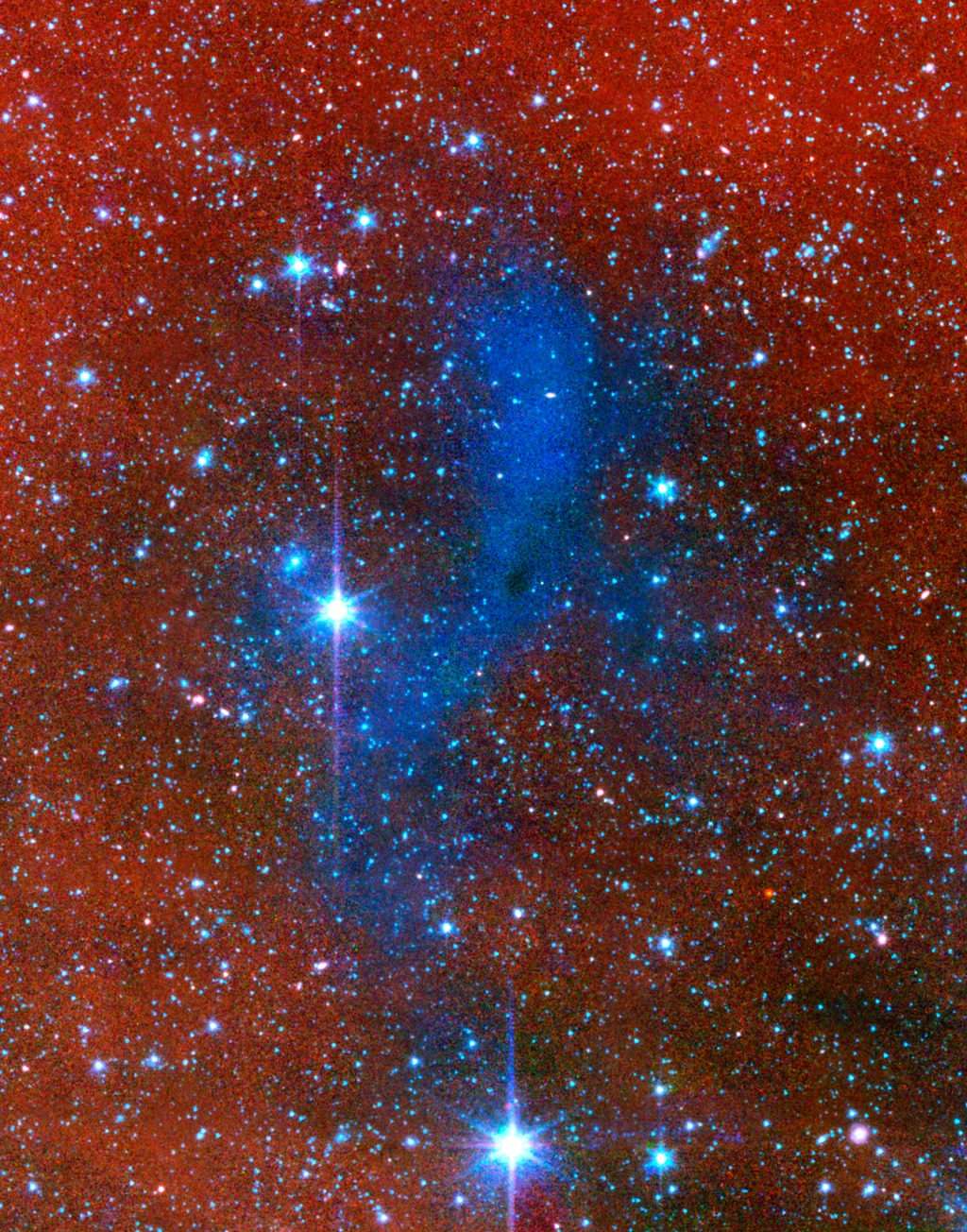
Credit: NASA/JPL-Caltech/L. Pagani (Observatoire de Paris/CNRS)
Observation • September 23rd, 2010 • sig10-020a
sig10-020a
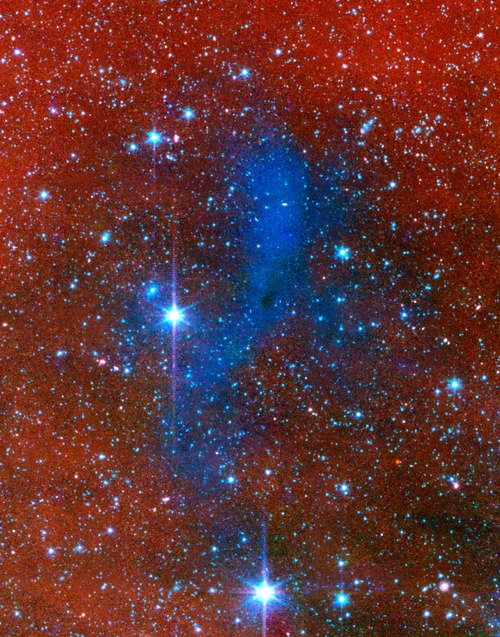
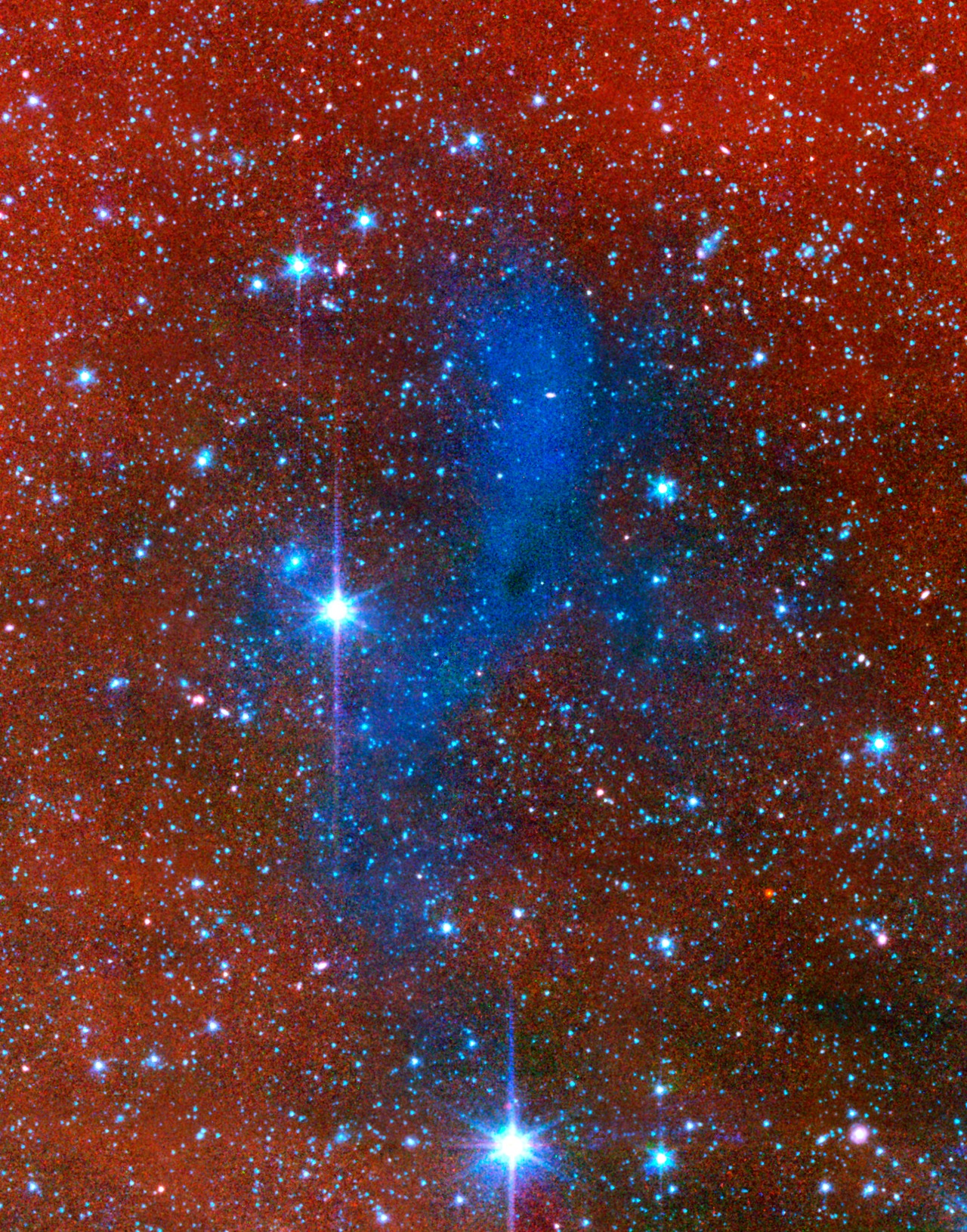
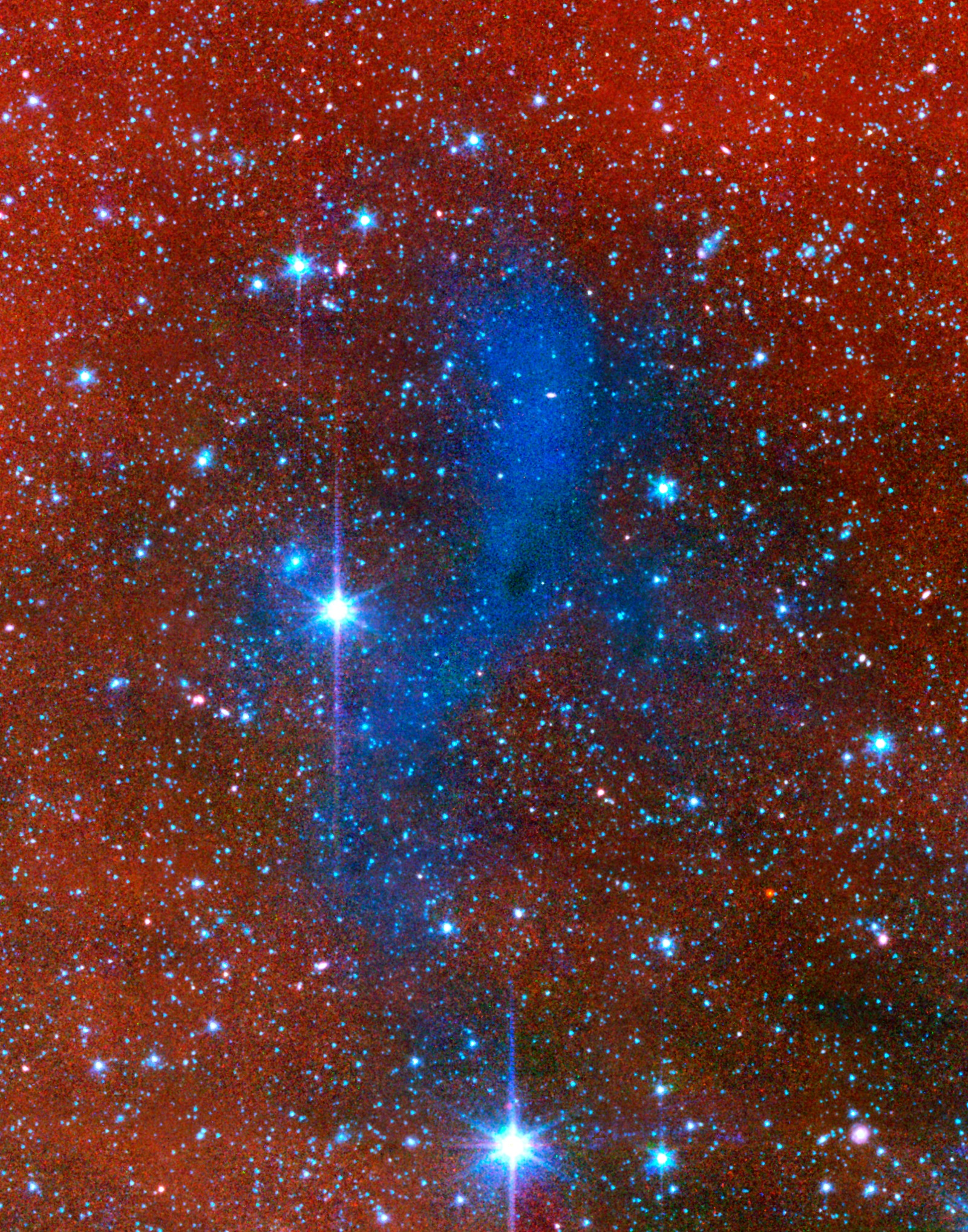
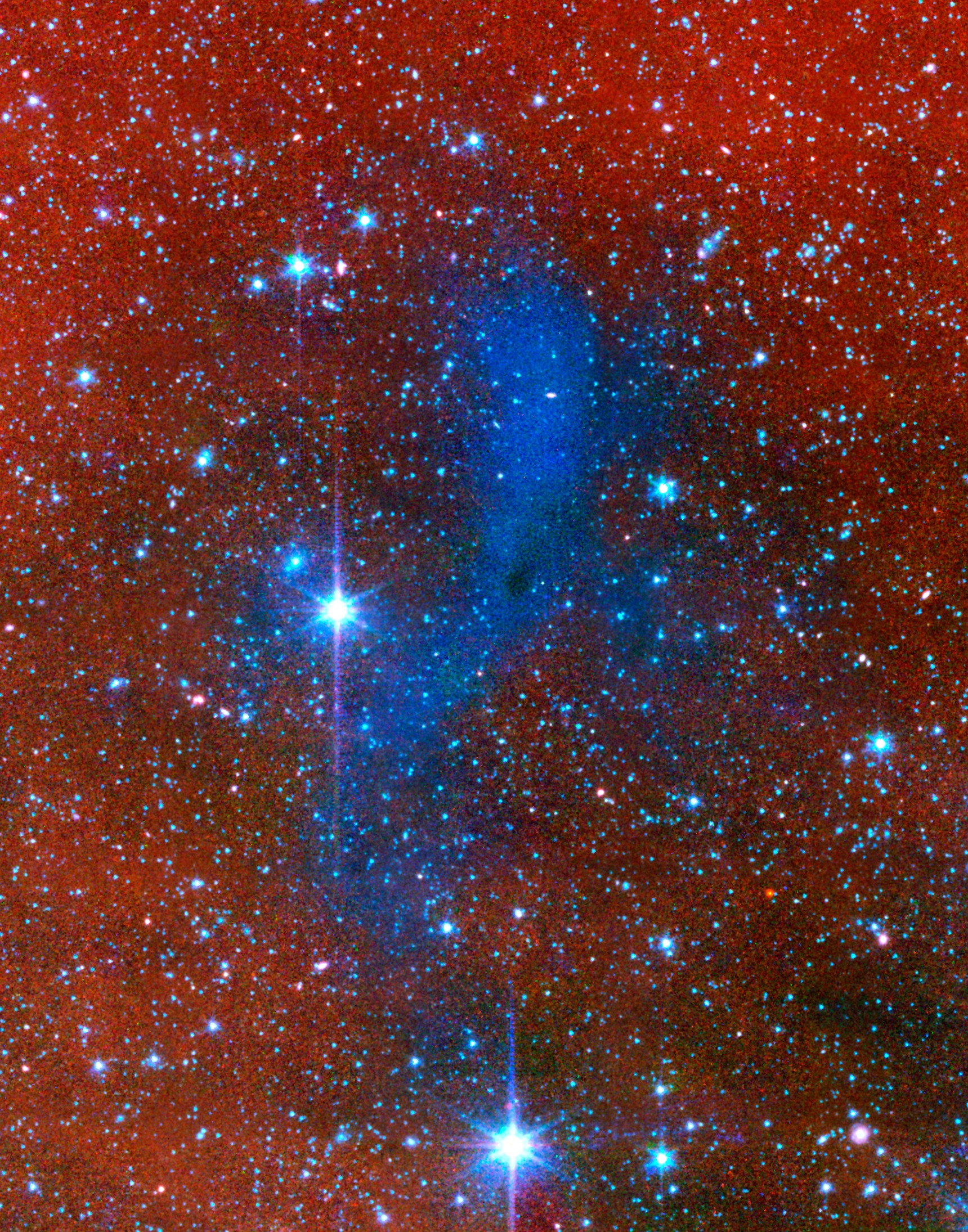
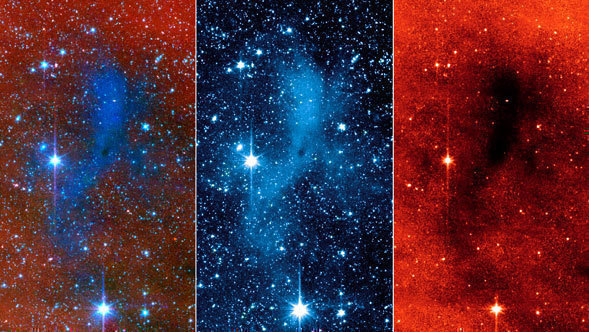
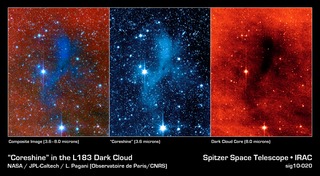
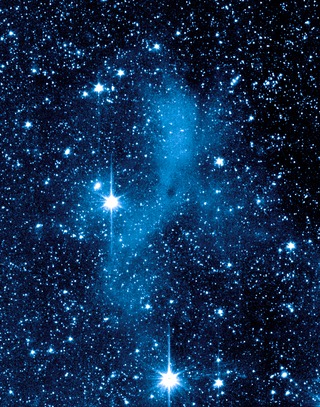
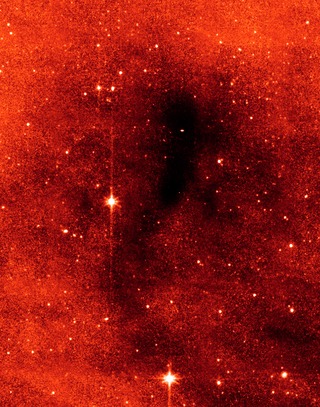
This series of images from NASA's Spitzer Space Telescope shows a dark mass of gas and dust, called a core, where new stars and planets will likely spring up.
This image is combination of infrared light from 8 microns and 3.6 microns. The core lights up because it is deflecting starlight from nearby stars. This unexpected light, called coreshine, tells astronomers that the dust making up the core must be bigger than previously thought -- smaller particles would not have been big enough to scatter the light.
This particular core lies deep within a larger dark cloud called L183. Spitzer's infrared vision allows it to peer into the dark cloud to see the even darker cores buried inside.
The observations were made with Spitzer's infrared array camera (IRAC).
- 320x407 (104 KB)
- 500x637 (213 KB)
- 1024x1304 (694 KB)
- 1280x1630 (979 KB)
- 1600x2037 (1.34 MB)
- 1720x2190 (1.49 MB)
About the Object
- Name
- Lynds 183 • L183
- Type
- Nebula > Appearance > Dark
- Distance
- 325 Light Years
Color Mapping
| Band | Wavelength | Telescope |
| Infrared | 3.6 µm | Spitzer IRAC |
| Infrared | 4.5 µm | Spitzer IRAC |
| Infrared | 8.0 µm | Spitzer IRAC |
Astrometrics
- Position (J2000)
- RA =15h 54m 10.3s
- Dec = -2° 53' 32.6"
- Field of View
- 17.2 x 21.9 arcminutes
- Orientation
- North is 15.0° right of vertical