Credit: NASA/JPL-Caltech/J. Tobin (University of Michigan)
Observation • May 20th, 2010 • sig10-006e
sig10-006e
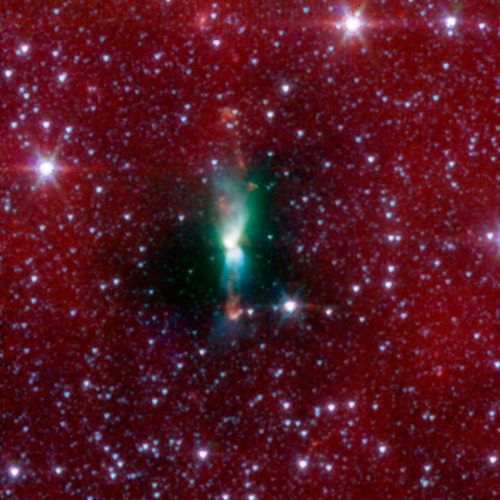
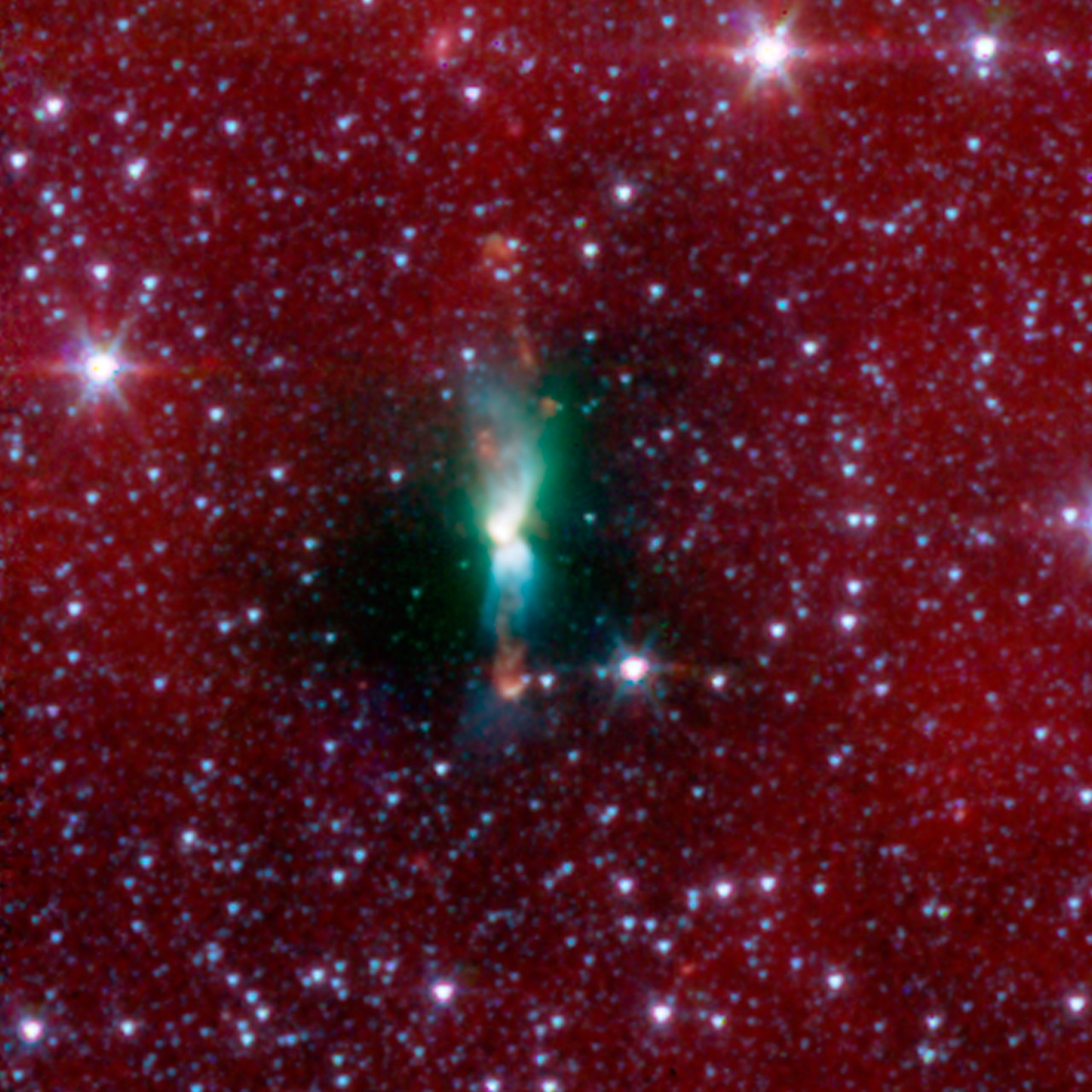
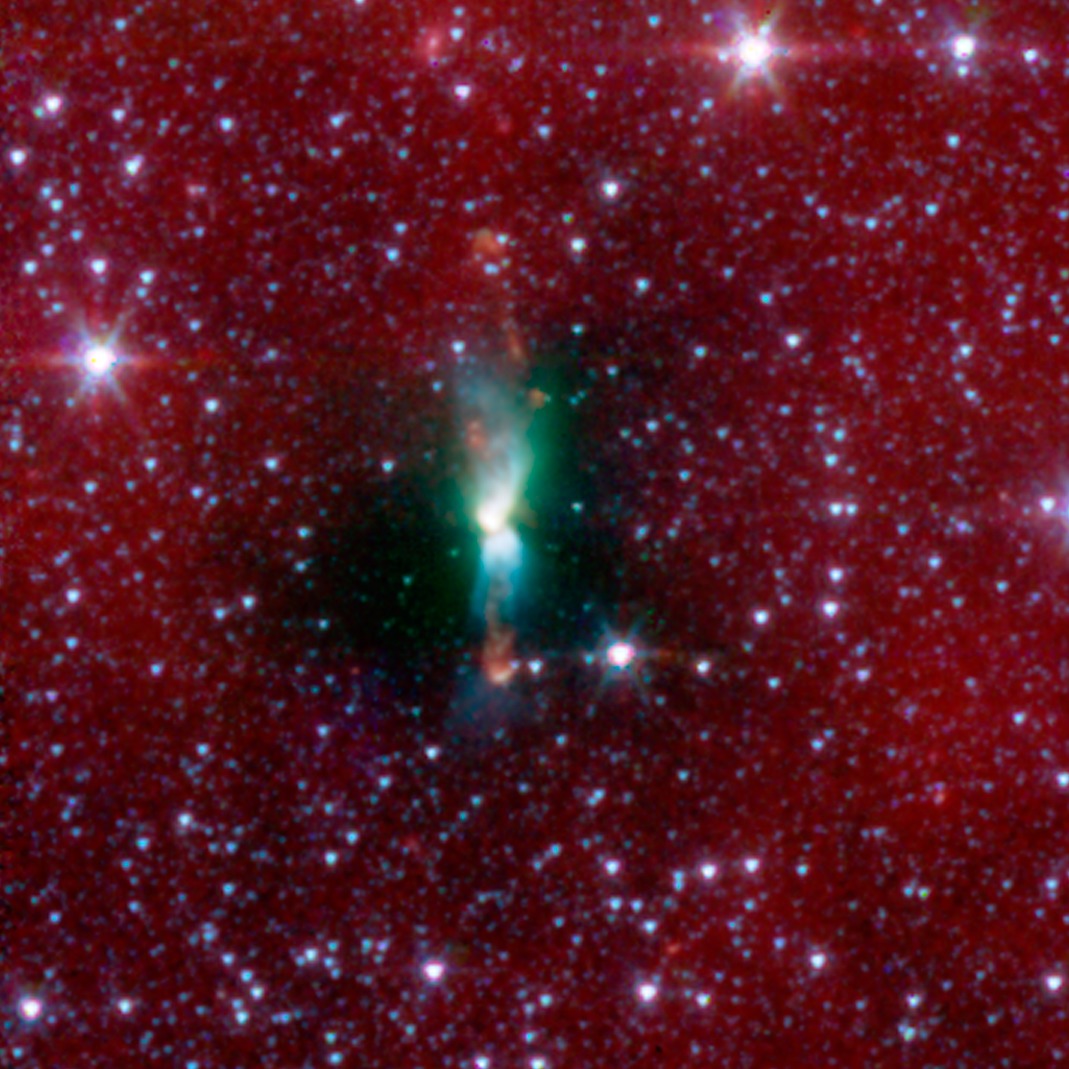
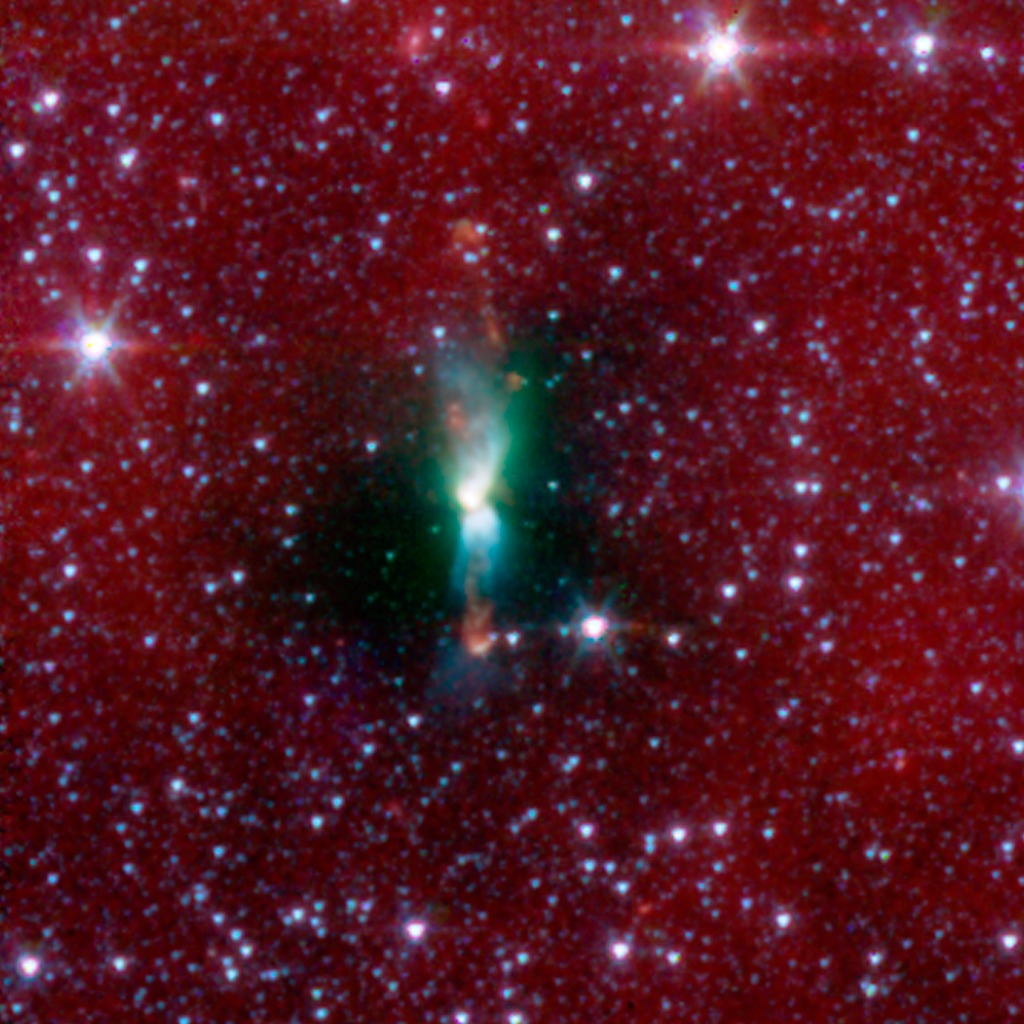
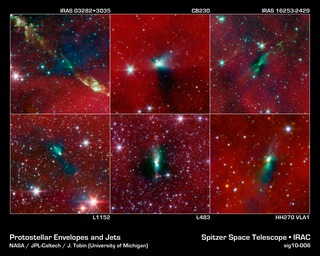
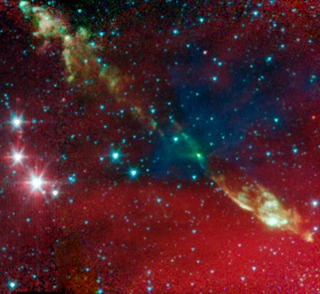
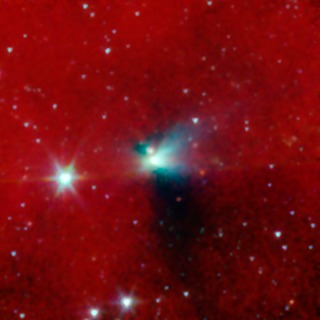
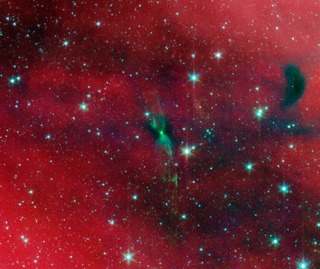
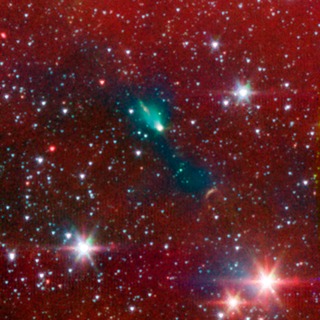
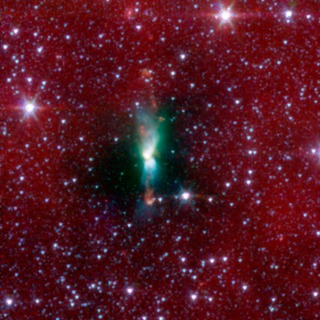
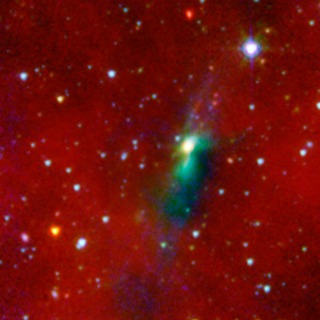
A young protostar and its signature outflow peeks out through a shroud of dust in this infrared image from NASA's Spitzer Space Telescope.
Stars are known to form from collapsing clumps of gas and dust, or envelopes, seen here around a forming star system as a dark blob, or shadow, against a dusty background. The greenish color shows jets coming away from the young star within. The envelope is roughly 100 times the size of our solar system.
Astronomers believe that the irregular shape of the envelope, revealed in detail by Spitzer, might have triggered the formation of twin, or binary stars in this system.
Infrared light with a wavelength of 3.6 microns has been color-coded blue; 4.5-micron light is green; and 8.0-micron light is red.
About the Object
- Name
- L483
- Type
- Nebula > Type > Jet
- Star > Evolutionary Stage > Protostar
- Star > Circumstellar Material > Disk > Protoplanetary
Color Mapping
| Band | Wavelength | Telescope |
| Infrared | 3.6 µm | Spitzer IRAC |
| Infrared | 4.5 µm | Spitzer IRAC |
| Infrared | 8.0 µm | Spitzer IRAC |
Astrometrics
- Position (J2000)
- RA =18h 17m 29.9s
- Dec = -4° 39' 21.9"
- Field of View
- 7.3 x 7.3 arcminutes
- Orientation
- North is 98.0° right of vertical