Download Image
About the Image
- Date
- 2007-09-06
- ID
- ssc2007-15a1
- Type
- Observation
- Credit
- NASA, ESA, and N. Pirzkal (STScI/ESA)
- Observers
- N. Pirzkal (STSCI/ESA) S. Malhotra (Arizona State University) J. Rhoads (Arizona State University) C. Xu (Shanghai Institute of Technical Physics) S. Beckwith (STScI) S. Malhotra (STScI) M. Giavalisco (STScI) N. Panagia (STScI) J. Rhoads (STScI) M. Stiavelli (STScI) R. Somerville (STScI) S. Casertano (STScI) B. Margon (STScI) C. Blades (STScI) J. Caldwell (STScI) M. Clampin (STScI) M. Corbin (STScI/CSC) M. Dickinson (STScI) H. Ferguson (STScI) A. Fruchter (STScI) R. Hook (STScI/ECF) S. Jogee (STScI) A. Koekemoer (STScI) R. Lucas (STScI) M. Sosey (STScI) L. Bergeron (STScI) R. Thompson (University of Arizona) G. Illingworth (university of California, Santa Cruz) R. Bouwens (university of California, Santa Cruz) M. Dickinson (STScI) D. Eisenstein (University of Arizona) X. Fan (University of Arizona) M. Franx (University of Leiden) M. Rieke (University of Arizona) A. Riess (STScI) P. van Dokkum (Yale University) H. Yan (Caltech) M Dickinson (NOAO) D. Stern (Jet Propulsion Lab) P. Eisenhardt (Jet Propulsion Lab) R.-R. Chary (Caltech) M. Giavalisco (STScI) H. Ferguson (STScI) S. Casertano (STScI) C. Conselice (Caltech) C. Papovich (Steward Observatory) W. Reach (Caltech) N. Grogin (STScI) L. Moustakas (Jet Propulsion Lab) M. Ouchi (STScI)
About the Object
- Name
- HUDF • Hubble Ultra Deep Field
- Type
- Cosmology > Morphology > Deep Field
Color Mapping
| Band | Wavelength | Telescope |
| Optical | 435 nm | Hubble ACS |
| Optical | 606 nm | Hubble ACS |
| Infrared | 775 nm | Hubble ACS |
| Infrared | 850 nm | Hubble ACS |
Hubble Ultra Deep Field
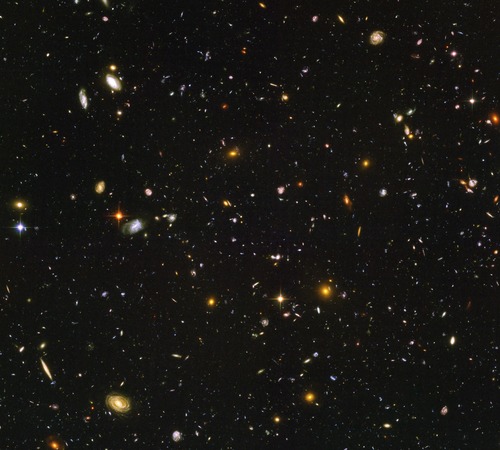
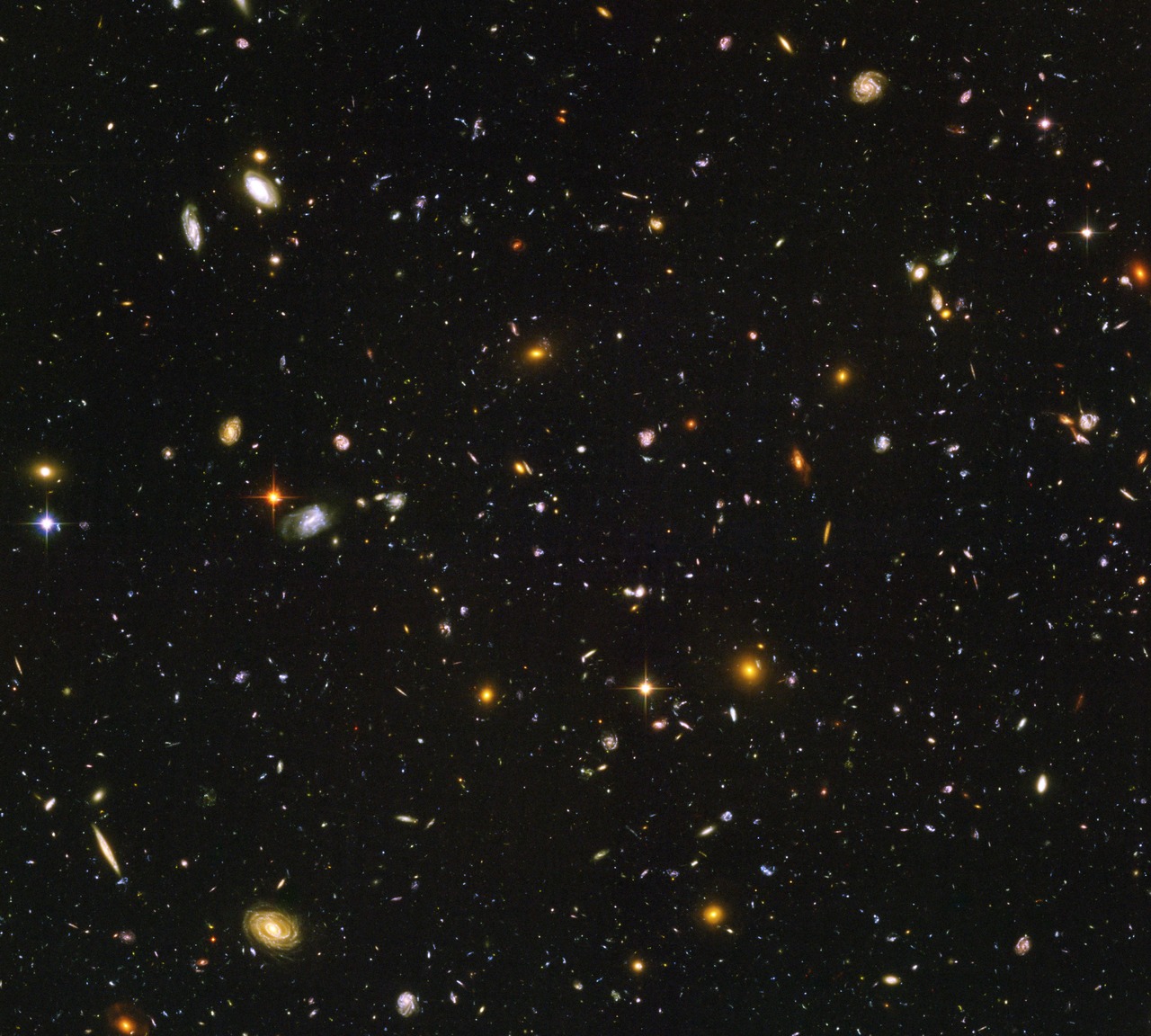
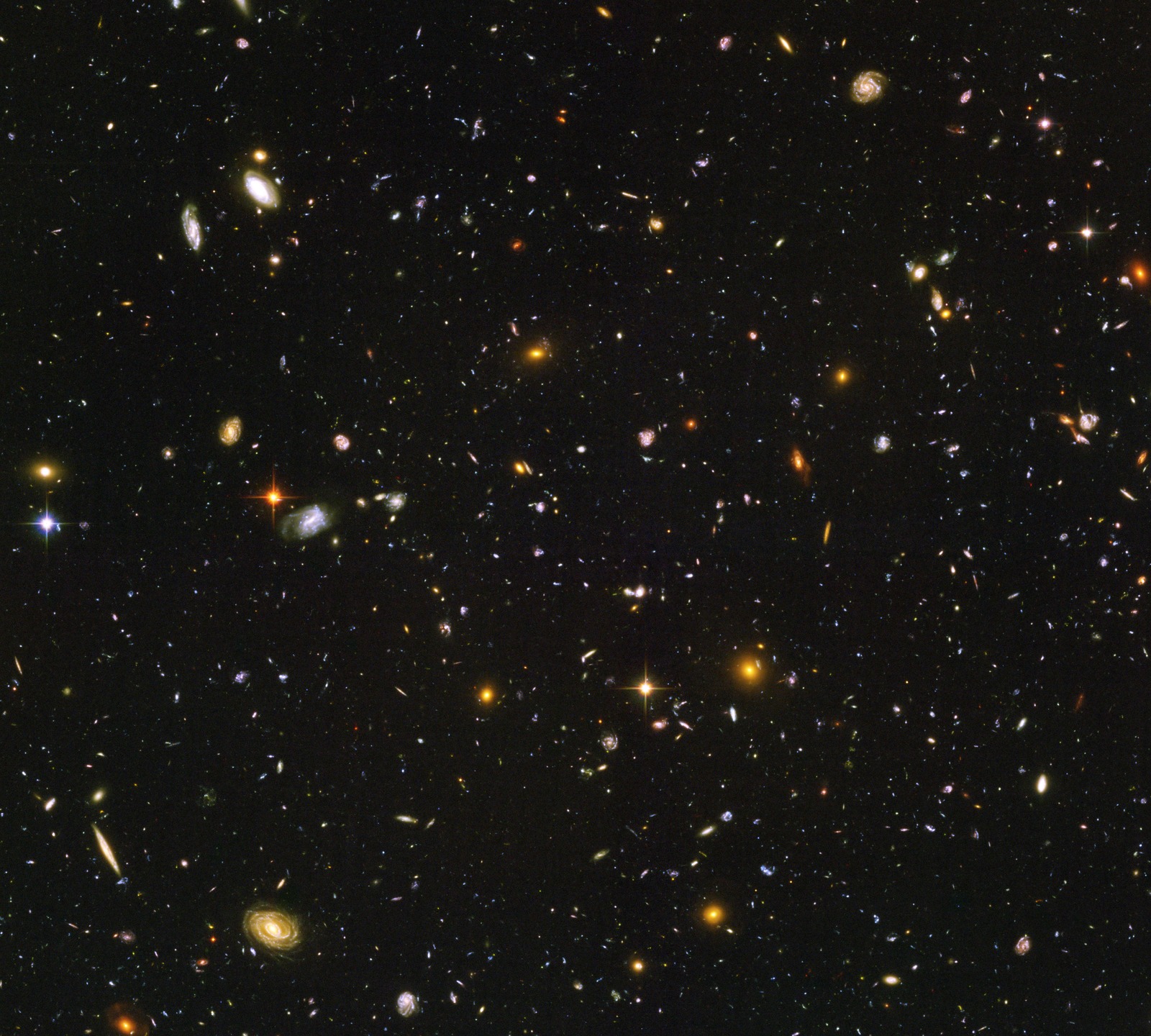
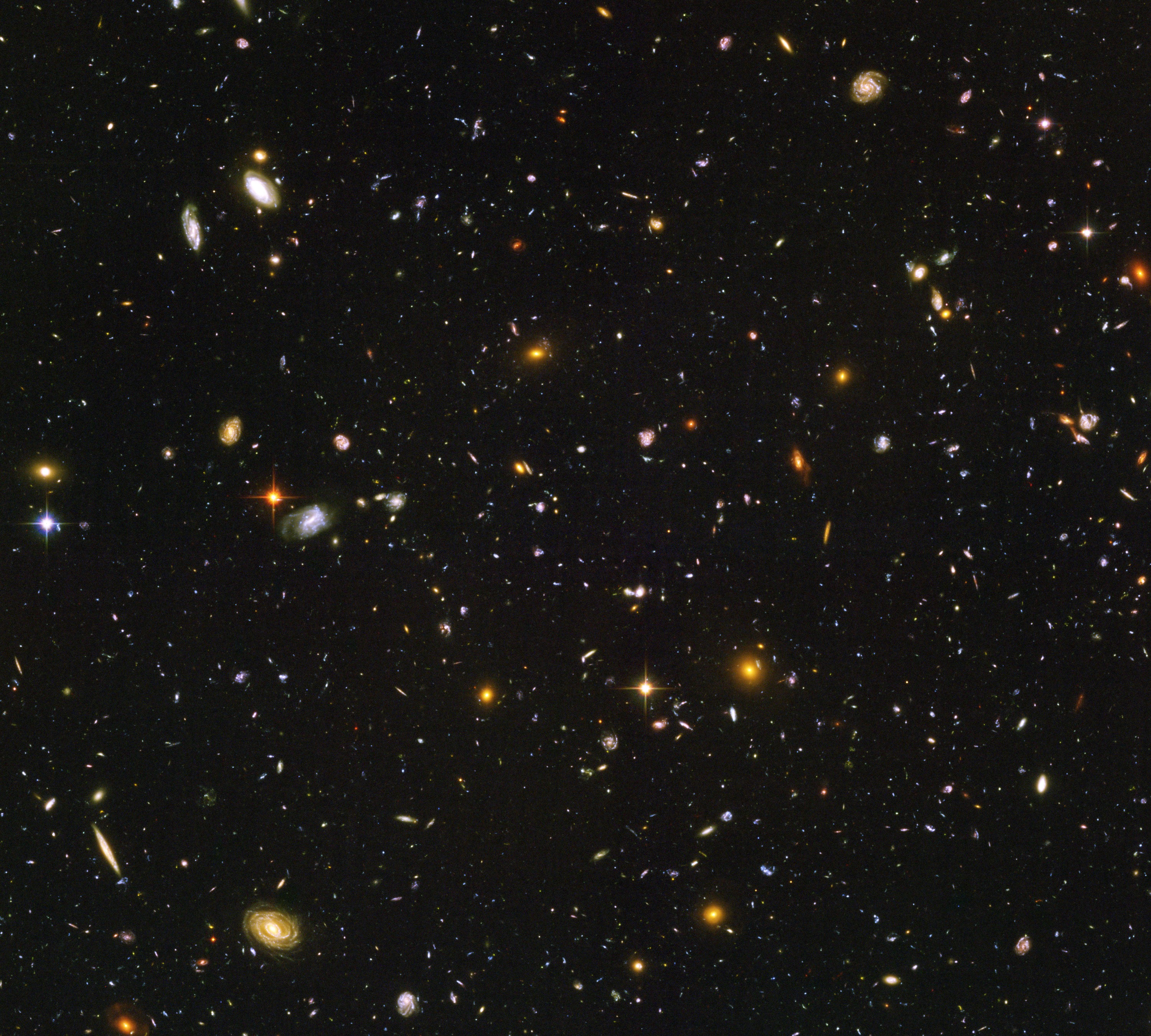
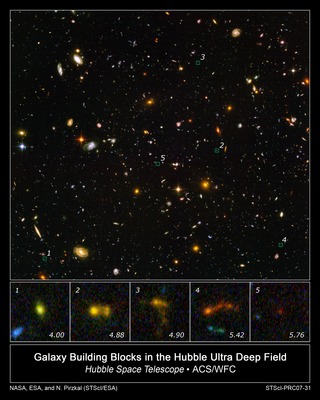
In this image of the Hubble Ultra Deep Field, several objects are identified as the faintest, most compact galaxies ever observed in the distant universe. They are so far away that we see them as they looked less than one billion years after the Big Bang. Blazing with the brilliance of millions of stars, each of the newly discovered galaxies is a hundred to a thousand times smaller than our Milky Way Galaxy.
The detection required joint observations between Hubble and NASA's Spitzer Space Telescope. Blue light seen by Hubble shows the presence of young stars. The absence of infrared light from Spitzer observations conclusively shows that these are truly young galaxies without an earlier generation of stars.
Related Media
|
News Release NASA Space Telescopes Find 'Lego-Block' Galaxies in Early Universe ssc2007-15 |
|
|
Image Hubble and Spitzer Uncover Smallest Galaxy Building Blocks ssc2007-15a |
Image Components
|
Image Hubble Ultra Deep Field ssc2007-15a1 |