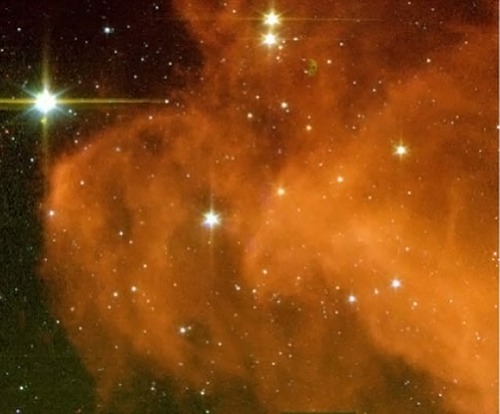
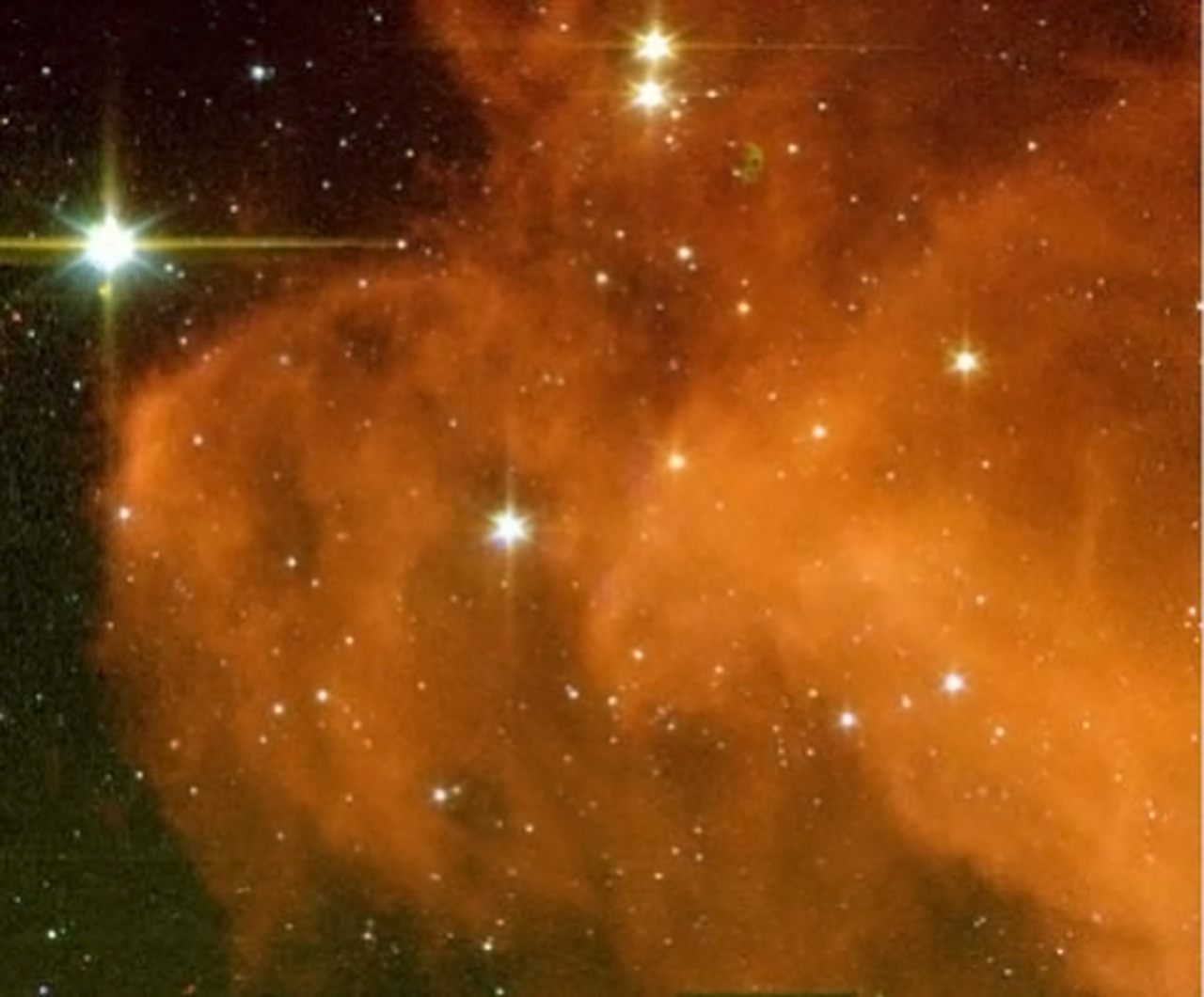
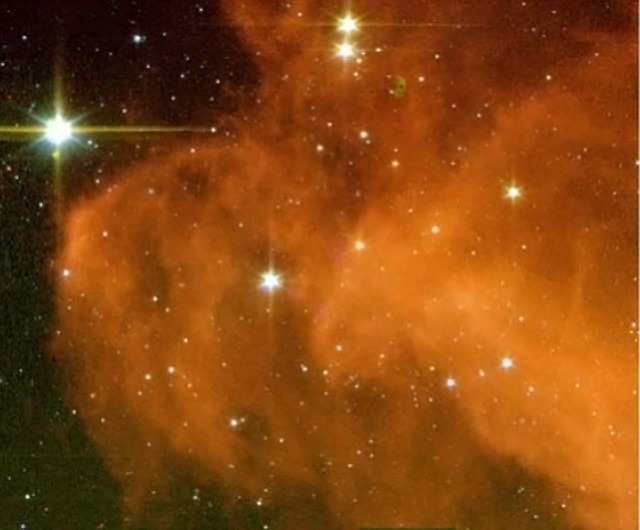
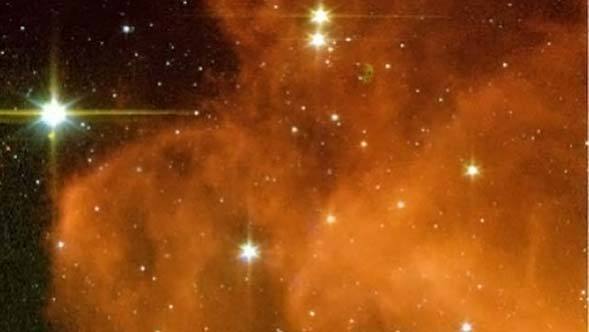
Baby Stars Brewing in the Witch Head Nebula
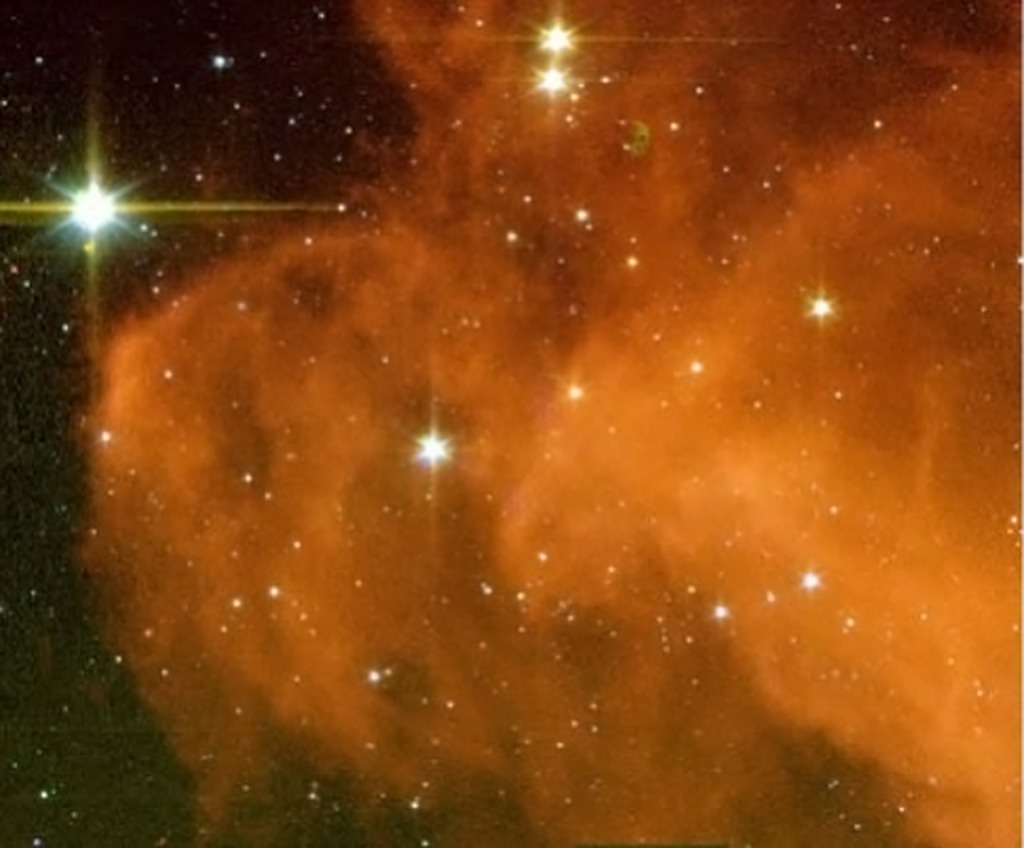
Credit: NASA/JPL-Caltech/L. Rebull (SSC/Caltech)
Observation • May 19th, 2006 • sig06-013
sig06-013
Eight hundred light-years away in the Orion constellation, a gigantic murky cloud called the "Witch Head Nebula" is teeming with dust-obscured newborn stars waiting to be uncovered. In this image, the super sensitive infrared eyes of NASA's Spitzer Space Telescope reveals 12 new baby stars in a small portion of the cloud commonly referred to as the Witch Head's "pointy chin."
The image is a four-color composite where blue represents 3.6 microns, green depicts 4.5 microns, yellow is 5.8 microns, and red is 8.0 microns.
About the Object
- Name
- Witch Head Nebula
- Type
- Nebula > Type > Star Formation
- Distance
- 800 Light Years
Color Mapping
| Band | Wavelength | Telescope |
| Infrared | 3.6 µm | Spitzer IRAC |
| Infrared | 4.5 µm | Spitzer IRAC |
| Infrared | 5.8 µm | Spitzer IRAC |
| Infrared | 8.0 µm | Spitzer IRAC |
Astrometrics
- Position (J2000)
- RA =5h 7m 50.3s
- Dec = -6° 21' 31.5"
- Field of View
- 18.4 x 15.2 arcminutes
- Orientation
- North is 1.1° left of vertical