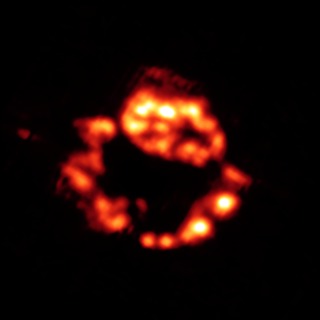
Dusty Celestial Ornaments Dusty Celestial Ornaments: Supernova Remnant Cassiopeia A in the Infrared
Credit: NASA/JPL-Caltech/J. Rho (Caltech-SSC)
Observation • December 20th, 2007 • ssc2007-20a3
ssc2007-20a3
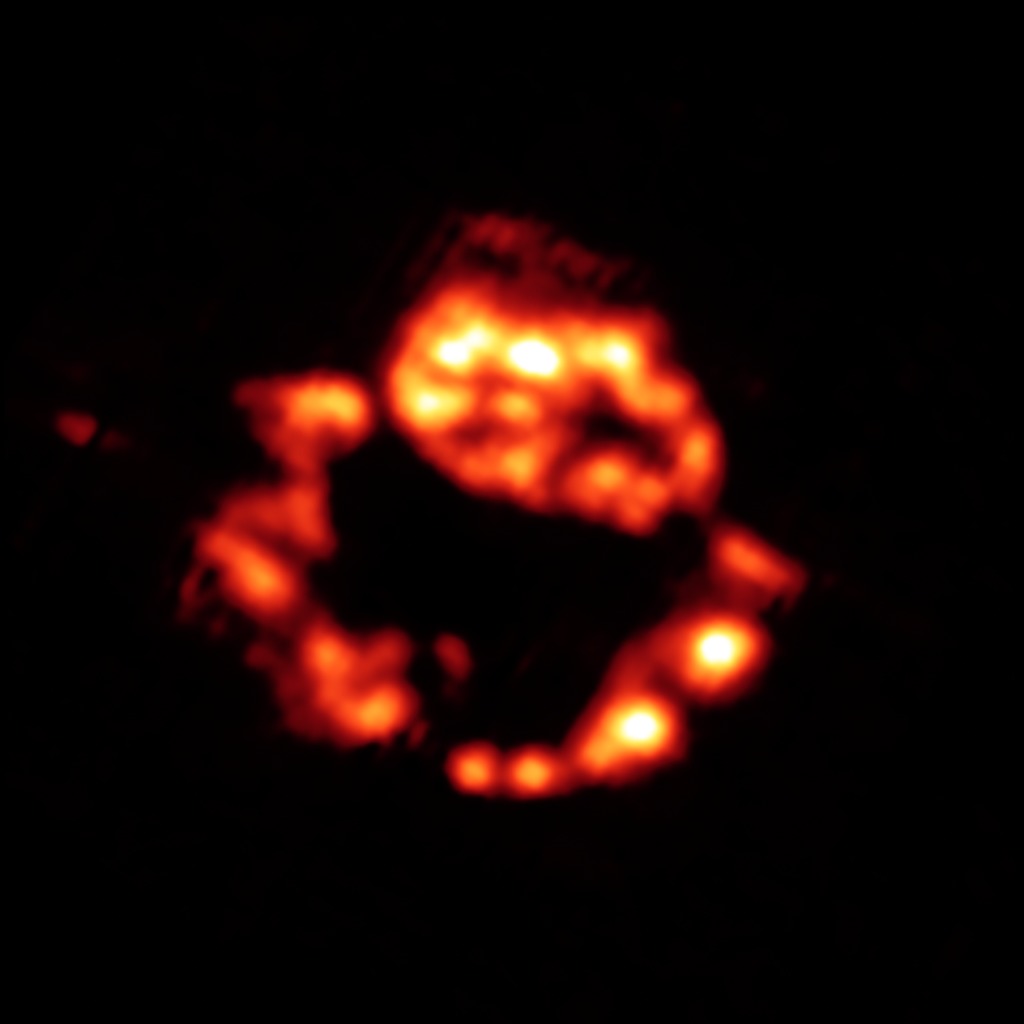
The Cassiopeia A supernova remnant is located about 10,000 light-years away in our own Milky Way galaxy.
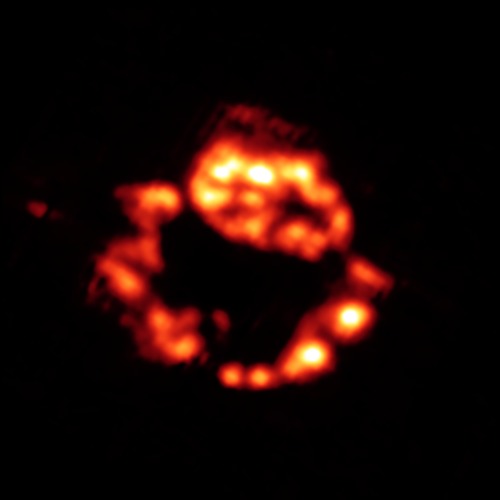
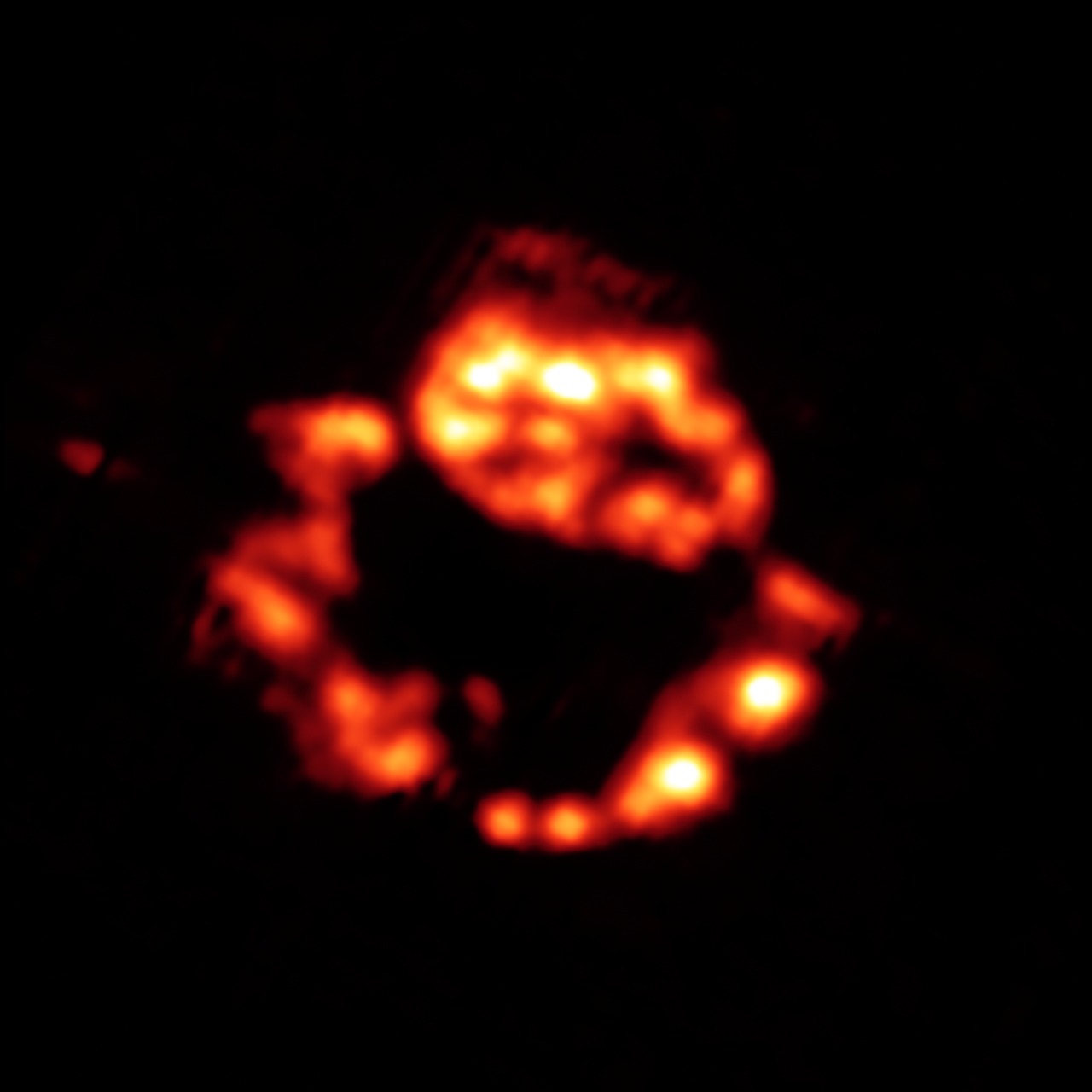
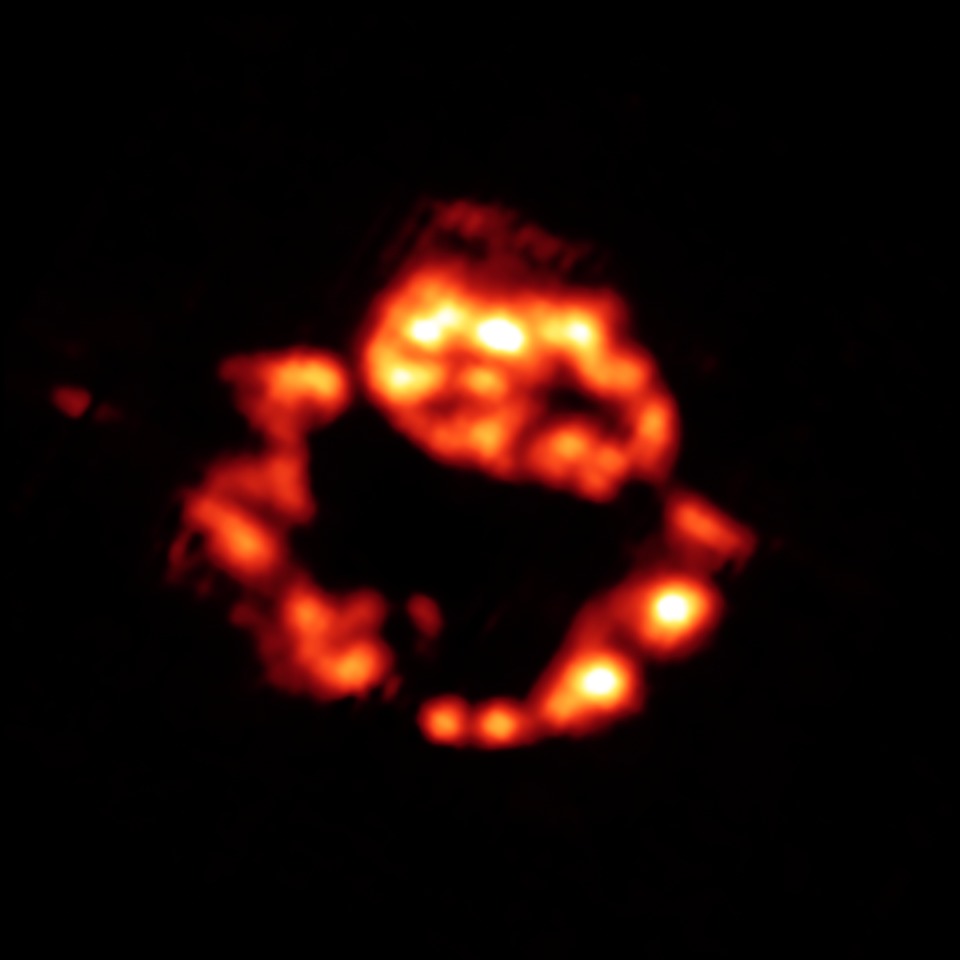
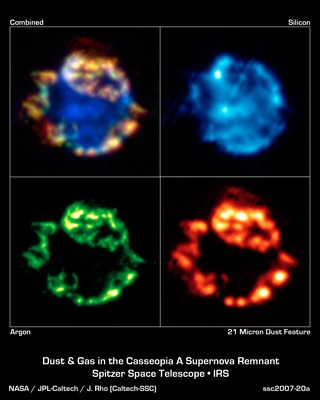
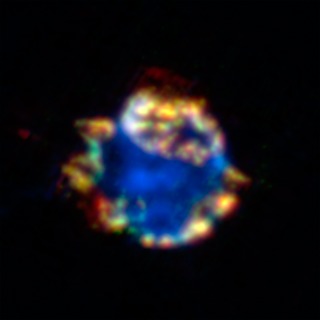
This infrared view shows a collection of dust (red), including proto-silicates, silicate dioxide and iron oxide.
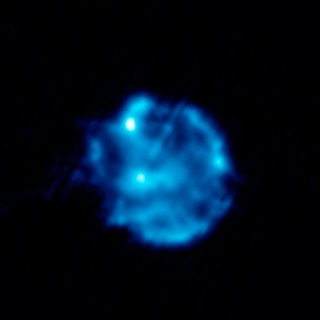
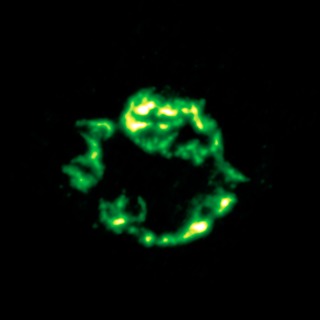
The data for this image were taken by Spitzer's infrared spectrograph, which splits light apart to reveal the fingerprints of molecules and elements. In total, Spitzer collected separate "spectra" at more than 1,700 positions across Cassiopeia A.
Downloads
JPG
TIF
Image Components
Observation
|
ssc2007-20a
Dusty Celestial Ornaments Dusty Celestial Ornaments: Supernova Remnant Cassiopeia A
Observation
|
ssc2007-20b
Cosmic Ornament of Gas and Dust: Supernova Remnant Cassiopeia A
Observation
|
ssc2007-20a1
Dusty Celestial Ornaments Dusty Celestial Ornaments: Supernova Remnant Cassiopeia A
Observation
|
ssc2007-20a2
Dusty Celestial Ornaments Dusty Celestial Ornament: Supernova Cassiopeian A in Infrared
Observation
|
ssc2007-20a3
Dusty Celestial Ornaments Dusty Celestial Ornaments: Supernova Remnant Cassiopeia A in the Infrared
About the Object
- Name
- Cassiopeia A • Cas A
- Type
- Nebula > Type > Supernova Remnant
- Distance
- 11,000 Light Years
Color Mapping
| Band | Wavelength | Telescope |
| Infrared | 21.0 µm | Spitzer IRS |
Astrometrics
- Position (J2000)
- RA =23h 23m 25.7s
- Dec = 58° 49' 12.9"
- Field of View
- 8.0 x 8.0 arcminutes
- Orientation
- North is 0.2° left of vertical