Credit: NASA/JPL-Caltech/J. Hora (Harvard-Smithsonian CfA)
Observation • January 9th, 2006 • ssc2006-01a1
ssc2006-01a1
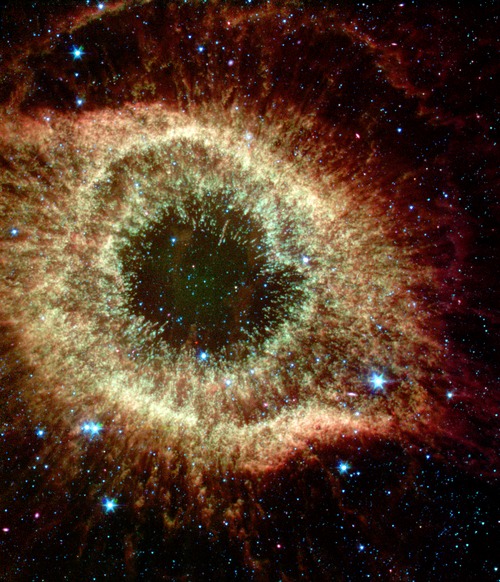
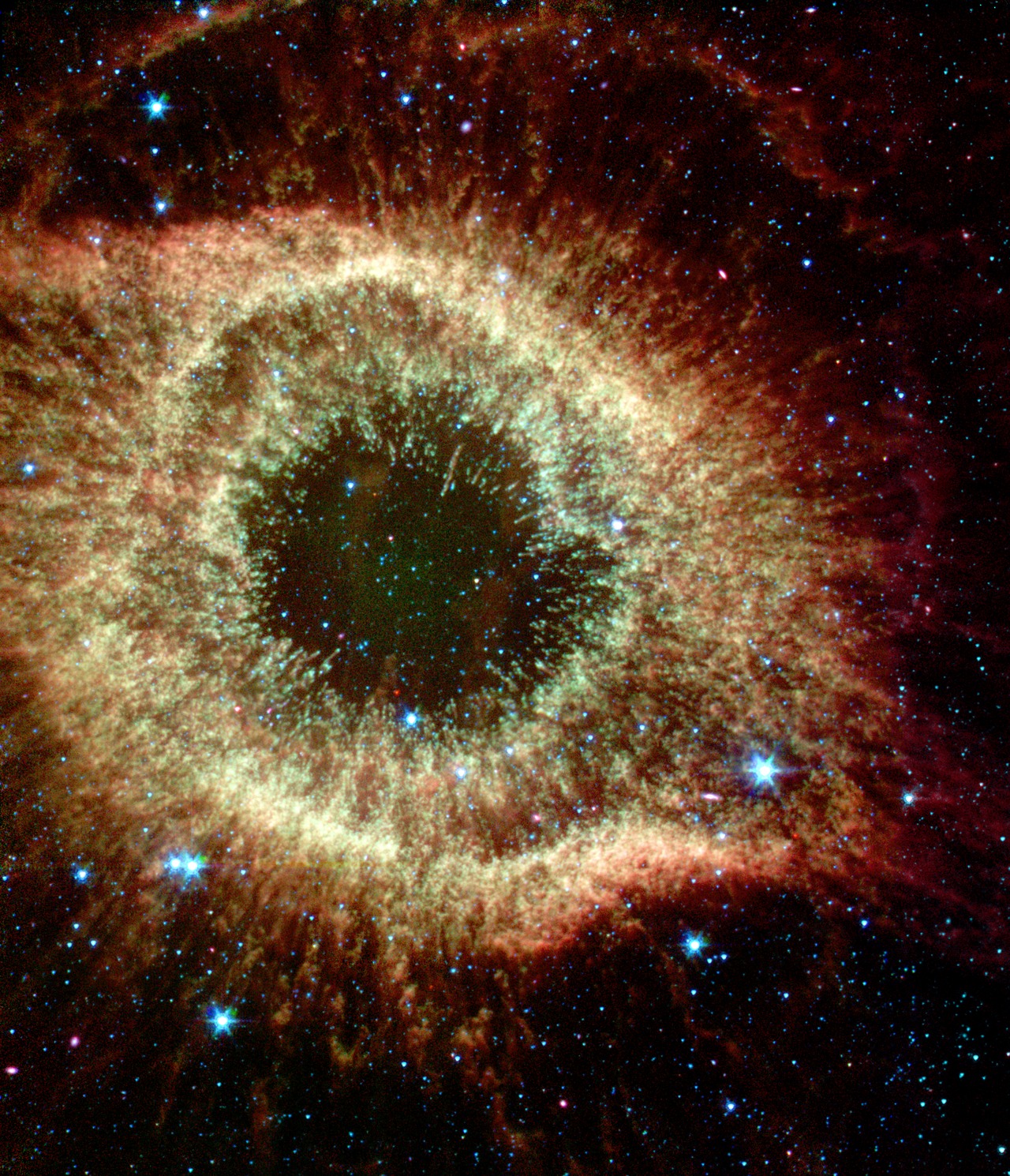
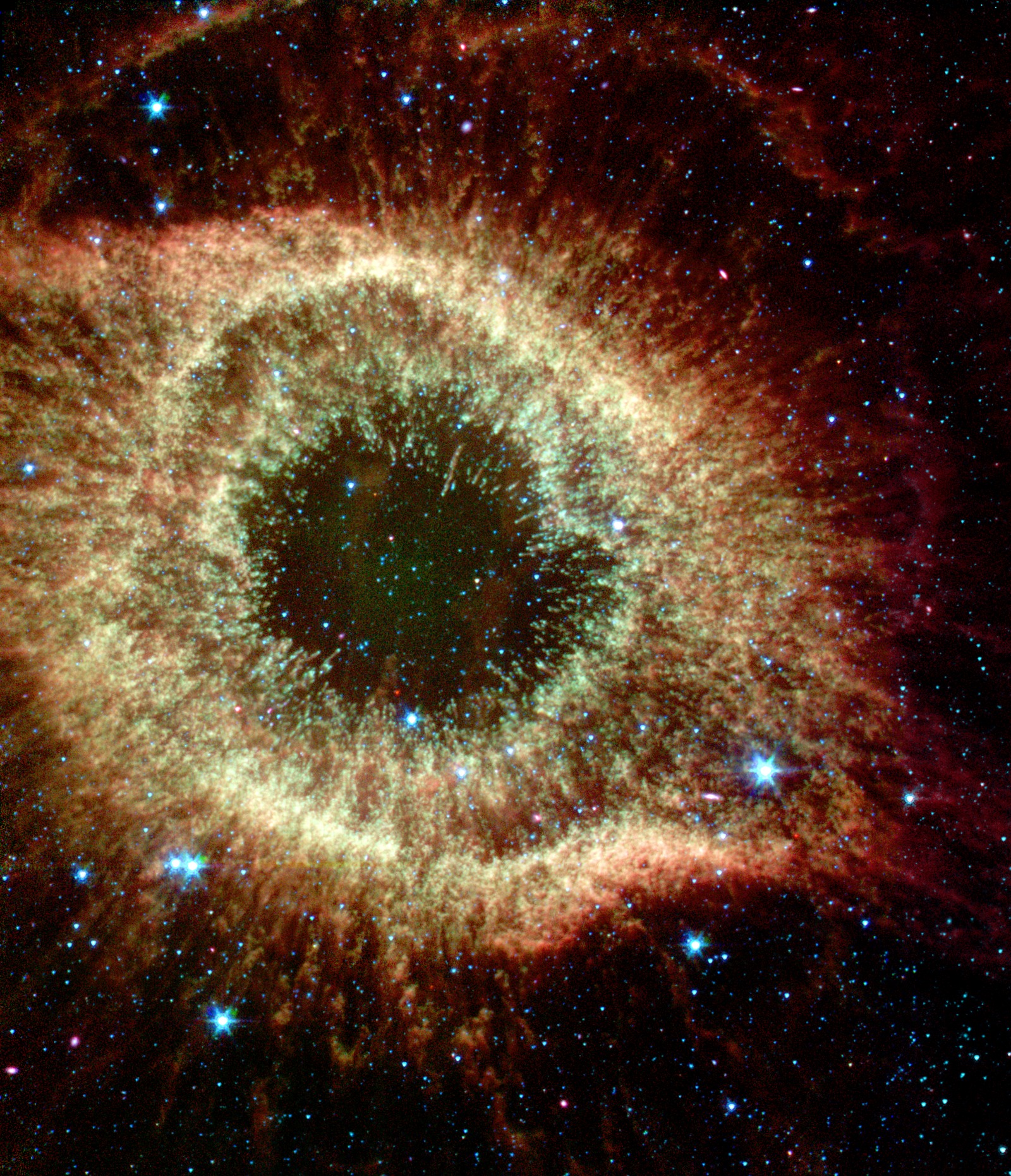
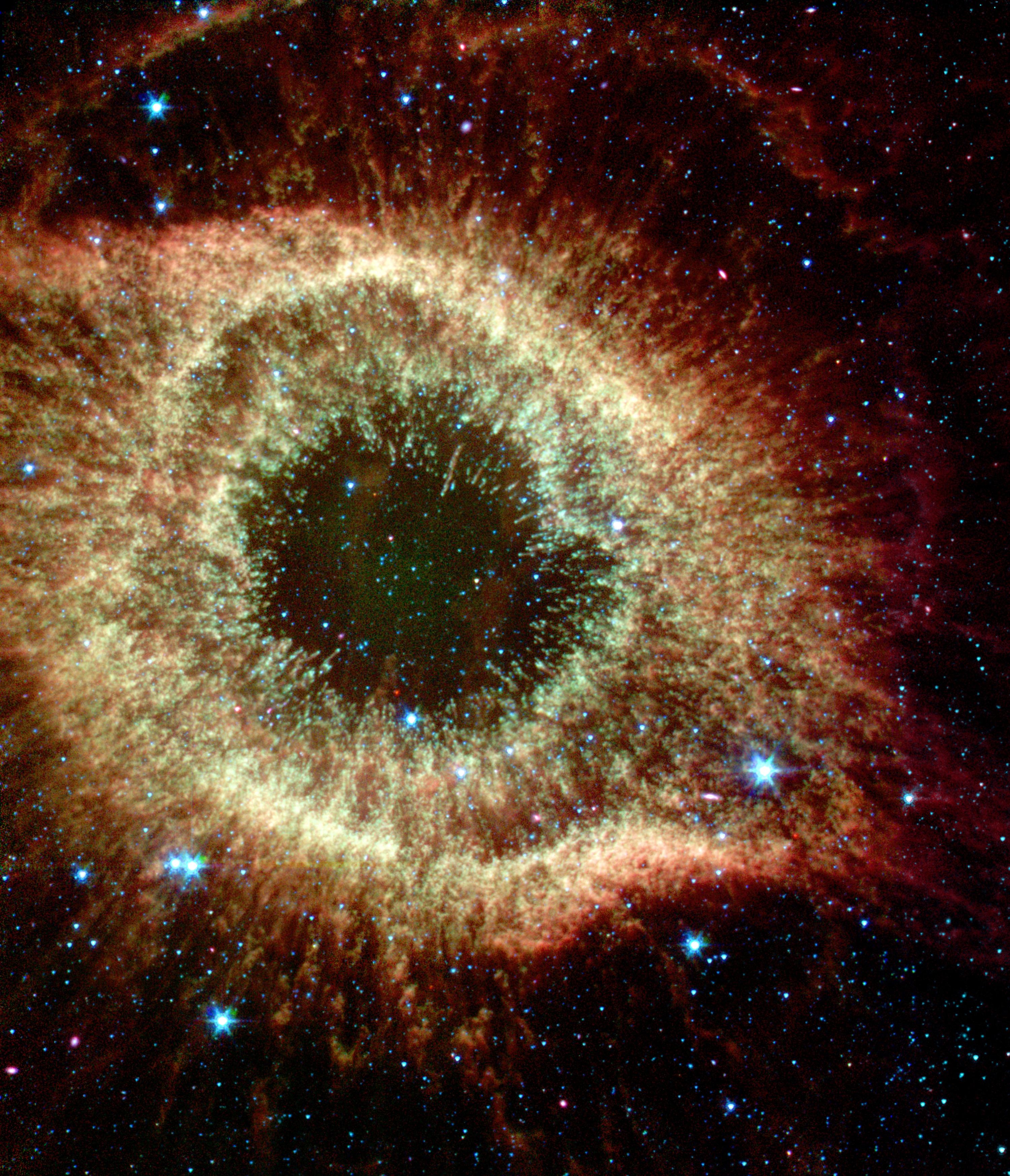
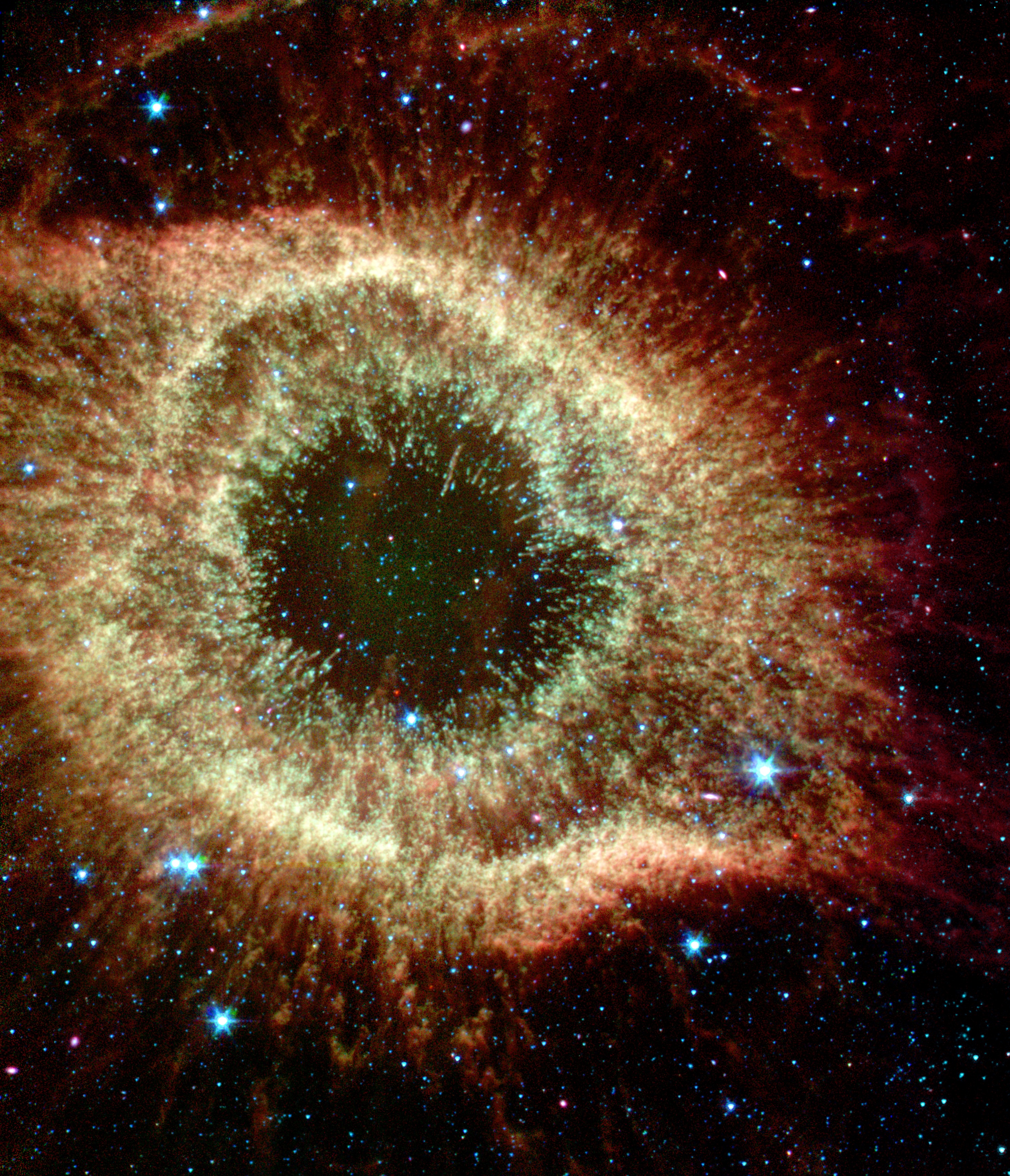
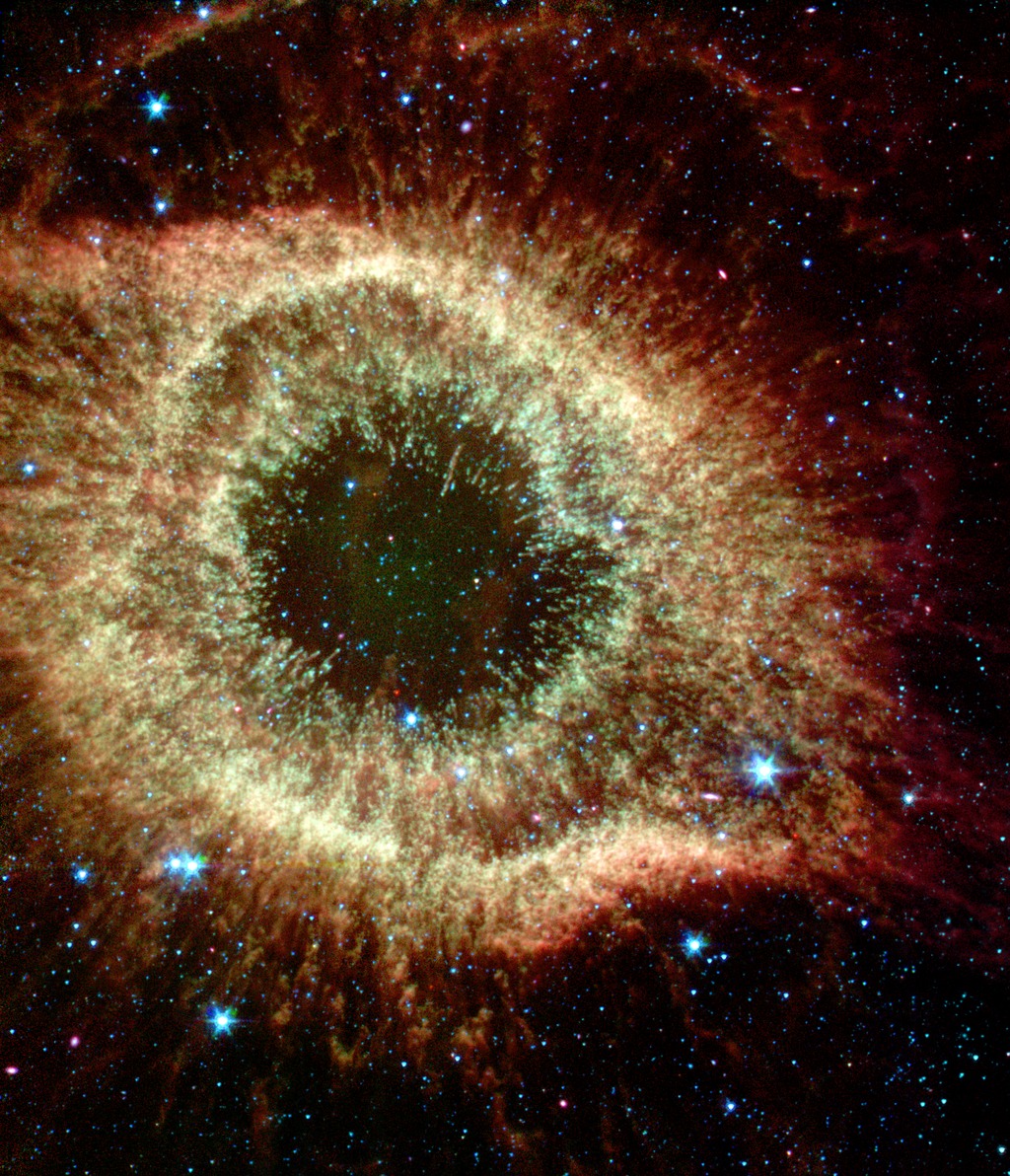
The Helix Nebula, which is composed of gaseous shells and disks puffed out by a dying sunlike star, exhibits complex structure on the smallest visible scales. In this new image from NASA's Spitzer Space Telescope, infrared light at wavelengths of 3.6, 4.5, and 8.0 microns has been colored blue, green, and red (respectively). The color saturation also has been increased to intensify hues. The "cometary knots" show blue-green heads due to excitation of their molecular material from shocks or ultraviolet radiation. The tails of the cometary knots appear redder due to being shielded from the central star's ultraviolet radiation and wind by the heads of the knots.
About the Object
- Name
- Helix Nebula • NGC 7293
- Type
- Nebula > Type > Planetary
- Distance
- 650 Light Years
Color Mapping
| Band | Wavelength | Telescope |
| Infrared | 3.6 µm | Spitzer IRAC |
| Infrared | 4.5 µm | Spitzer IRAC |
| Infrared | 8.0 µm | Spitzer IRAC |
Astrometrics
- Position (J2000)
- RA =22h 29m 33.3s
- Dec = -20° 48' 46.8"
- Field of View
- 19.8 x 23.1 arcminutes
- Orientation
- North is 61.0° right of vertical