By Robert Hurt | July 28th, 2010
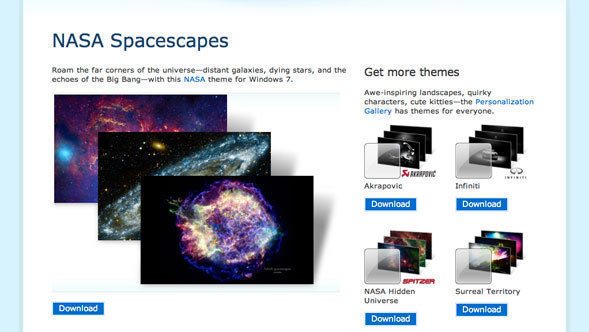
Today Microsoft, in collaboration with the Spitzer team, has released a new "NASA Spacescapes" Windows theme that features some of the most amazing astrophysics imagery NASA has to offer. The pictures feature results from seven different NASA missions and include many that combine data from multiple telescopes, spanning the light spectrum.
To pull this together we selected some of our very favorites, spanning the distant universe to the nearby Milky Way. Many of the images have been featured in the exhibit, "From the Earth to the Universe," one of the 2009 International Year of Astronomy projects.
If you can't get enough of the universe on your desktop, make sure to download the wildly popular "NASA Hidden Universe" theme that includes some of Spitzer's best space imagery. And if you don't have a Windows computer don't worry; you can download archives of the NASA Spacescapes (6 MB) and NASA Hidden Universe (7.4 MB) desktop image collections (just click the links in this line) that will work on any platform.
UPDATE: You can now grab individual Spitzer wallpapers from our new and improved wallpaper section!
The new Spacescapes theme has been posted to commemorate the anniversary of the signing of the National Aeronautics and Space Act on July 29th, 1958, which mandated the formation of NASA later that year.
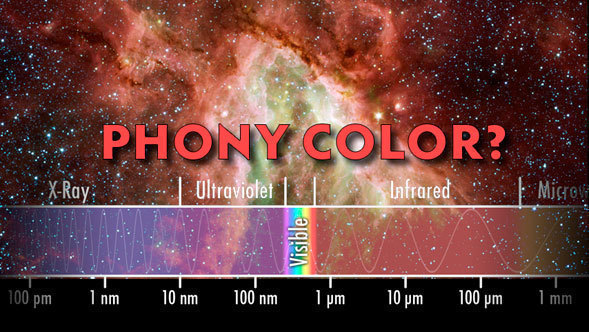 Phony Colors? Or Just Misunderstood?
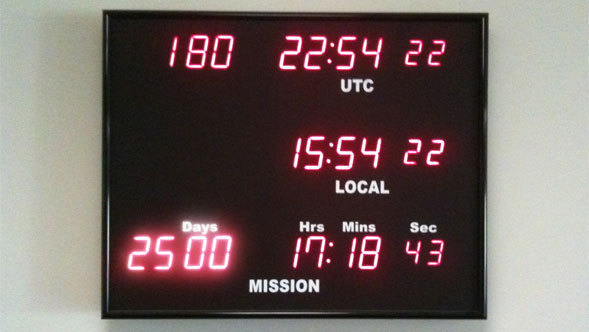 2500 Days of Spitzer